
Prevent. Decide.
A monitoring and early-warning platform that alerts you when an event anywhere in the world could affect the ports, airports and cities your operations depend on.
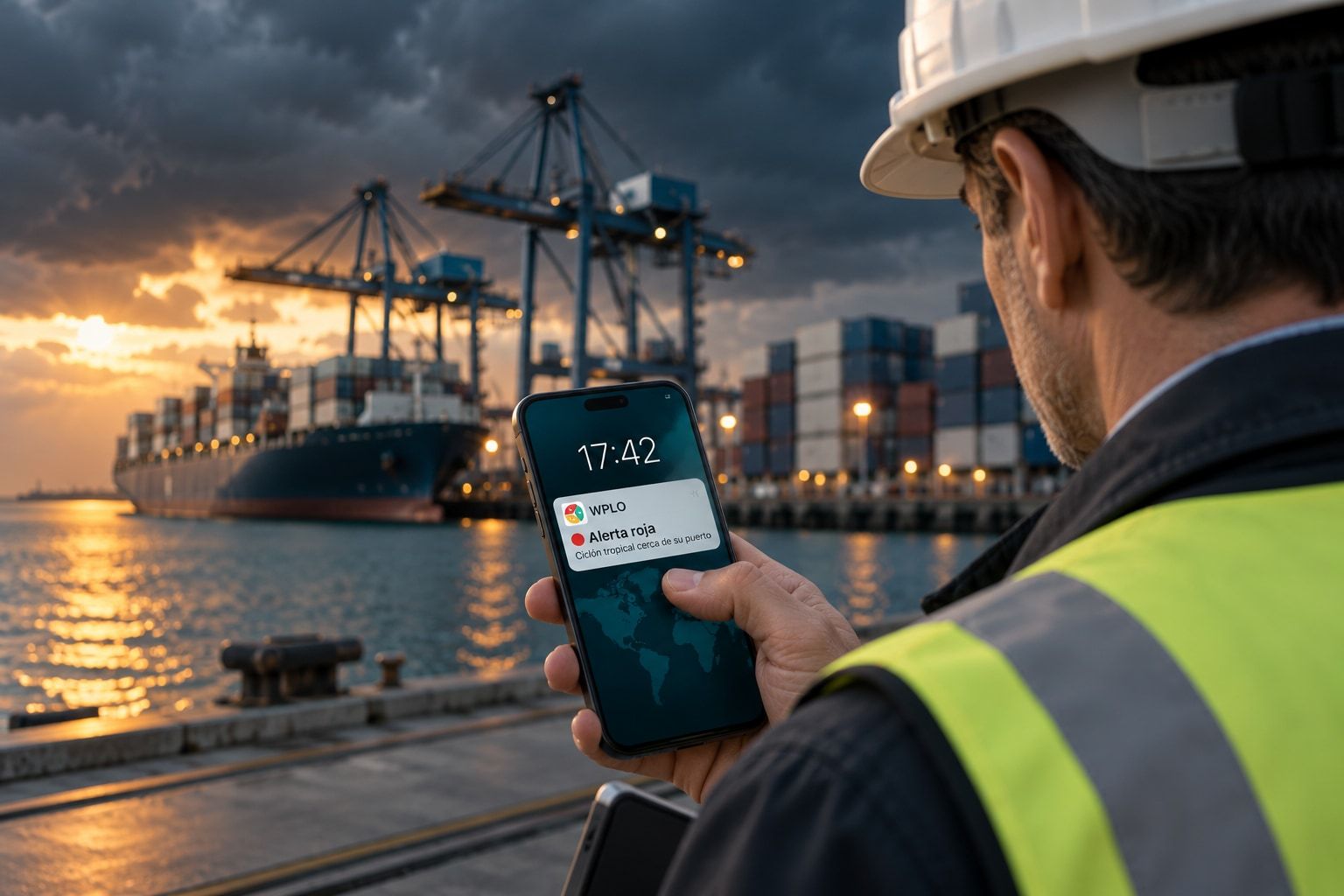
How WPLO works
WPLO brings together information from recognised sources on events that could affect trade and supply chains. It checks each event against the places you monitor and, if the event concerns you, sends you an alert with its level and the reason. That way, instead of reacting to disruption, you prepare for risk.
Three questions, one alert
What is happening?
The events that matter for trade and logistics, as the sources publish them.
Where could it affect you?
Each event is checked against your places: if it falls within your radius, you receive an alert.
What do you need to know to decide?
What happened, near which of your places and according to which source. The decision, and when to make it, are yours.
Three alert levels
Every alert comes with one of three levels, so that you can see at a glance what to deal with first.
Situation under control.
Risk to consider.
Critical disruption.
Who it is for
Businesses in trade, and logistics operators.
Importers, exporters, shipping lines, port operators, carriers, cargo terminals and logistics zones.
Why: to act as soon as a disruption occurs: reschedule shipments and let their customers know as early as possible.
Governments, public institutions and civil protection.
Why: to follow, in one place, the events that could affect the country’s ports, airports and cities, and to coordinate the response in good time.
Chambers of commerce, business associations and insurers.
Why: to guide their members and clients with timely information, and to gauge the risk exposure of the operations they represent or insure.
The media.
Why: to report, with data from recognised sources, when an event anywhere in the world could affect trade and the supply of goods.
Universities, research centres and multilateral organisations.
Why: to study how events around the world affect supply chains, and to support prevention policies.
“Preparing for risk costs less than reacting too late.”
Ready to receive your alerts?
Subscribe online and sign in from your computer or your phone. Available on Google Play and the App Store, with your subscription account.